KORE Expansion Project Highlight-Madison County Harm Reduction
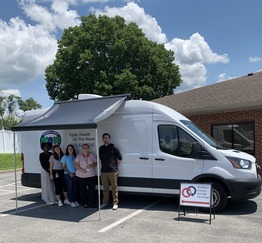
For the Madison County Health Department Harm Reduction Program, the KORE Expansion Project Grant has been all about outreach, education, and relationship building. They engaged emergency medical services, universities and colleges, shelters for the unhoused, law enforcement, treatment providers, the general public, and, of course their participants.
Over the course of the last year, the program reached participants, trained the community partners, and informed the public in new ways that met individuals where they are geographically and in their understanding of the work being done at the Madison County Health Department Hard Reduction Program.
While KORE Expansion Project funding supported many projects within the Madison County Harm Reduction Program, it greatly enhanced the mobile services throughout the community. The outreach team offers syringe services, Overdose Prevention and Response, HIV testing, snacks, winter gear, and linkage to care on the mobile unit. A Recovery Coach from Voices of Hope and a Community Health Worker from AmeriCorps are embedded in the mobile unit. Prior to receiving KORE expansion funding, the mobile unit operated on a fixed route unable to meet the ever-changing trends in where program participants were located. And because program participants live throughout Madison County, the fixed route only met the needs of a limited number of individuals.
To address this, MCHD HRP began offering On-Demand mobile services in addition to the fixed routes. Participants call a direct line to connect with the outreach team and request a mobile visit that day. Thanks to the support of the city and the county, the mobile services increased to most locations during our On-Demand hours, which are offered two days per week. Fixed van routes are also available each week and updated with input from program participants, ODMAPs, and community requests. This hybrid delivery model saves resources, including staff time, fuel, wasted printing costs due to outdated mobile schedules, and allows extreme flexibility in mobile offerings, avoiding stops that become inactive over time.
Promotion efforts for the On-Demand service option included Facebook announcements, distribution of business cards, and word-of-mouth referrals. Mobile services have continued to increase despite the loss of one of the program’s most attended outreach locations. Overall, mobile services represented 12% of all visits this year compared to 9% last year, increasing from 166 visits to 230 visits. The On-Demand program received around 100 phone calls in FY26, and more than 20 text threads included requests for mobile services.
Published in the KDPH Harm Reduction Branch Quarterly Newsletter, Summer 2026 Edition